From Ranch to Retail: How Third-Party Verification Is Shaping the Future of Beef
Whole Foods Market and Where Food Comes From discuss evolving consumer expectations, the importance of credible claims and how verification can help beef producers access new market opportunities.

Today's beef consumers want to know more than what's on their plate. They want to understand where their food comes from, how animals were raised and whether the claims they see on packaging can be trusted.
For beef producers, those expectations are creating new opportunities to differentiate their cattle, demonstrate responsible production practices and connect with value-added markets.
At the recent Texas A&M Sustainability Field Day in Decatur, Texas, Lora Wright, Vice President of Sustainable Proteins at Where Food Comes From, Inc. (WFCF), joined Tate Ramos, Animal Welfare Program Manager at Whole Foods Market, to discuss how consumer preferences are influencing retail sourcing decisions and why third-party verification is becoming increasingly important throughout the beef supply chain.

Their conversation highlighted a central message: The practices producers implement on the ranch have value, but being able to independently verify and communicate those practices is what helps translate that value into marketplace opportunities.
Consumer Expectations Are Influencing Retail Requirements
As consumers become increasingly removed from production agriculture, retailers are playing a larger role in connecting shoppers with the people and practices behind their food.
According to Ramos, animal welfare remains one of the most important considerations for Whole Foods Market customers purchasing meat.
"Animal welfare comes up quite a bit," Ramos explained. "We have, in our meat department, a requirement that all the meat we sell has a third-party animal welfare certification."
Whole Foods Market also requires third-party verification for grassfed claims and for regenerative claims appearing on the front of product packaging.
These requirements extend beyond marketing preferences. They help retailers establish consistent standards across suppliers and provide greater confidence in the claims communicated to consumers.
Ramos emphasized that verification is not about questioning a producer's integrity.
"It's not that we don't trust that if you have your own program that it has integrity," he said.
"We just want to be able to say somebody that came in from the outside validated that."
For producers, this distinction is important. Many are already implementing practices that align with value-added programs. Independent verification provides the documentation and consistency needed to communicate those practices beyond the ranch operation.
Turning Responsible Production Practices Into Credible Claims
A beef producer's management practices can vary considerably depending on geography, climate, production systems and operational goals. Yet retailers need a consistent way to evaluate those practices and communicate their value.

Ramos described how the process begins with practices implemented on the ranch, followed by clearly defined standards and independent verification. Together, those elements support supply chain integrity, chain of custody and credible retail claims.
"Verification really creates that common language," Ramos said. "Everybody does things in a different way."
That common language is especially important in a retail environment, where consumers may spend only a few seconds evaluating a product label.
Wright reinforced the industry's responsibility to help consumers understand the work happening throughout production agriculture.
"As consumers are further and further removed from production agriculture, they don't know what happens on the farm or the ranch," Wright explained. "They have questions. And I feel like it's our responsibility as an industry to be able to really rise to that occasion and share with them the great things that we're doing."
Verification helps bridge that gap, connecting documented production practices with the claims consumers encounter at the meat case.
It also plays an important role in regulatory compliance. Wright discussed updated guidance from the USDA Food Safety and Inspection Service (FSIS) encouraging the use of third-party verification to substantiate certain animal-raising claims on meat products.
For brands, processors and retailers, independently verified programs can provide valuable support when documenting and communicating those claims.
Animal Welfare and Sustainability: A Broader Conversation
Although regenerative agriculture and environmental sustainability continue to receive significant attention, the discussion highlighted how consumers and retailers are considering a broader range of production attributes.
Whole Foods Market evaluates regenerative agriculture programs against principles related to soil health, biodiversity, reduced soil disturbance, living roots, cover crops and livestock integration.
However, sustainability extends beyond environmental measurements alone.
Wright discussed WFCF's CARE Certified program, launched in 2020, which takes a holistic approach to sustainability through three key areas:

Rather than focusing exclusively on carbon or emissions, CARE Certified recognizes the interconnected elements of a sustainable livestock operation.
Wright also discussed ongoing work to incorporate additional soil-testing parameters that could help support regenerative claims.
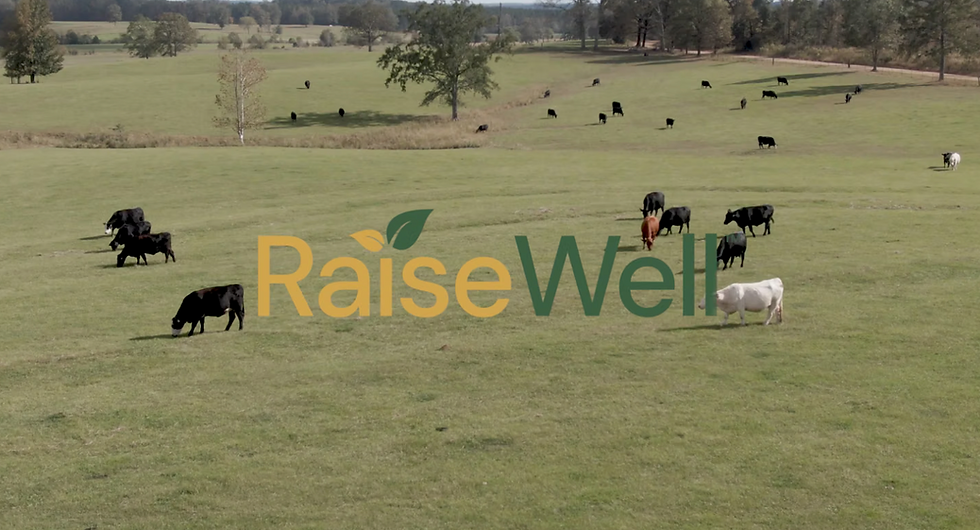
The panel also highlighted WFCF's RaiseWell Certified program, an animal welfare certification that incorporates natural raising requirements, including no antibiotics ever, no added growth hormones and no animal byproducts in feed.
Whole Foods Market recognized RaiseWell as an approved animal welfare certification program for beef in early 2026 and has since approved for various other species as well.
RaiseWell provides yet another pathway for qualifying suppliers to meet its animal welfare requirements.
Ramos explained that Whole Foods evaluates certification programs using an animal welfare framework based on the Five Domains, with species-specific considerations and critical requirements. Programs undergo a review process involving internal expertise and a governance committee before receiving recognition.
For producers and brands, these processes demonstrate the level of scrutiny retailers apply when determining which third-party programs support their sourcing standards.
What Consumers Say About Verified Beef
To bring consumer perspectives into the discussion, WFCF surveyed its Instagram audience ahead of the event, asking questions about verification, sustainability and purchasing preferences.
85% of survey respondents indicated they would be willing to pay more for verified beef.

While these informal social media results are not representative of all beef consumers, they provide an interesting snapshot of how WFCF's engaged audience interprets sustainability.
Animal welfare received the largest share of responses, reinforcing its relevance within the broader sustainability conversation.
Additional poll responses indicated that participants placed importance on knowing where their beef was raised and saw value in third-party food labels.
For Ramos, consumer interest in these attributes reflects an opportunity to communicate more effectively about production practices.
He also noted that younger shoppers appear increasingly interested in understanding where their food comes from and the sustainability practices associated with its production.
The challenge for the beef industry is translating complex production practices into clear, credible information that consumers can understand and trust.
Bundling Verification Programs Creates Opportunities Across the Supply Chain
As the number of claims and certification requirements increases, so does the potential burden on producers and suppliers navigating multiple audits.
Wright discussed the benefits of bundling verification programs, allowing producers to participate in multiple value-added opportunities while improving efficiency.
For example, a producer may qualify for age and source verification, animal welfare certification and sustainability programs. Participating in multiple programs can provide flexibility when marketing cattle into different supply chains.
"For instance, as a producer, you may be wanting to market your livestock in a couple different value chains," Wright explained. "It does afford you that option. It does afford flexibility in the marketplace."
Bundling can also benefit brands and retailers seeking to substantiate multiple claims on a single product, particularly when verification requirements overlap.
Ramos acknowledged the challenge of managing separate audits for different programs.
"There's a lot of audit fatigue out there," he said, explaining that having one organization capable of conducting multiple types of verification can help relieve some of that burden.
Through WFCF's portfolio of verification and certification services, producers and supply chain partners can explore opportunities to combine programs, reduce duplicative efforts and support multiple market requirements.
Does Verification Translate Into Additional Revenue?
One of the most important questions for producers is whether the potential return justifies the cost of verification.
The panel addressed that question directly.
Wright shared observations from video sale markets where verified cattle were sold, noting that premiums remain available for qualifying program cattle even during a period of strong
cattle prices.

These figures reflect the specific cattle and programs represented in the data, rather than guaranteed premiums for every verified animal.
Actual returns depend on factors such as program eligibility, cattle characteristics, market conditions, buyer demand and how cattle are marketed.
Verification also carries costs, including audits, travel expenses and animal identification requirements. Those expenses can affect smaller operations differently than larger ones.
Wright acknowledged those considerations, emphasizing that WFCF continues to evaluate ways to make verification more efficient and economical for producers of different sizes.
The broader opportunity is not simply earning a premium on a single sale. Verification can help producers differentiate their cattle and become eligible for additional buyers, supply chains and marketing programs.
That flexibility may become increasingly valuable as cattle markets and purchasing requirements evolve.
Certification Can Open Doors, but It Doesn't Guarantee a Sale
While verification can create market opportunities, Ramos cautioned producers against assuming that certification automatically results in retail placement.
Whole Foods Market considers multiple factors when evaluating potential suppliers, including product availability, logistics, quality standards, pricing and current category needs.
"Certification can create market access," Ramos explained. "But it doesn't necessarily guarantee it."
Retail buyers must have a need for the product, and suppliers must be able to meet operational and quality requirements.
For smaller producers and regional beef brands, local sourcing programs may offer another opportunity.
Ramos described how Whole Foods works with regional suppliers to highlight local ranches and share more specific stories about the people raising the beef.
However, those relationships still require coordination around processing, supply volumes and product distribution.
Wright emphasized the importance of working across the value chain to connect qualified producers with potential buyers.
WFCF's sales team works with producers, cooperatives and supply chain partners to facilitate introductions when opportunities align.
For producers considering verification, understanding the requirements and needs of potential buyers before selecting programs can help ensure their investment supports a clear marketing strategy.
Looking Ahead: The Future of Verified Beef
When asked what consumers might prioritize three to five years from now, Ramos suggested that the industry's existing focus on animal welfare, regenerative agriculture and verified production practices will likely continue to expand.
Rather than anticipating an entirely new set of consumer demands, he expects greater emphasis on measuring, validating and communicating the practices already being implemented.
"Being able to measure that and talk about it in a way that [explains] why it's good, and that it's been verified, I think is going to just continue to be more important to people," Ramos said.
He also pointed to the broader adoption of animal-raising standards across the retail industry, noting that practices once more closely associated with Whole Foods Market are now increasingly visible among other retailers.
For producers, this reinforces the importance of looking beyond today's cattle market.
Decisions made on the ranch today can influence the market opportunities available years later, particularly as retailers and brands continue refining their sourcing standards.
Building Value From Ranch to Retail
The discussion between WFCF and Whole Foods Market reinforced that third-party verification is more than a certification or a label.
It provides a way to document responsible production practices, establish trust throughout the supply chain and connect producers with markets seeking specific product attributes.
For retailers, it supports credible claims and consistent sourcing standards while helping them mitigate risk as well. For consumers, it provides greater confidence in the food they purchase. And for producers, it can create opportunities to differentiate their cattle and demonstrate the value of practices they may already have in place.
As consumer expectations continue to evolve, the ability to verify and communicate how beef is raised will remain an important part of connecting ranchers, brands, retailers and consumers.
Interested in learning how third-party verification can support your operation or supply chain?
Where Food Comes From offers a range of verification and certification programs designed to help producers and brands document their practices, meet market requirements and explore new value-added opportunities.